Many Startups and SMEs find that security gaps appear when workloads are spread across public cloud, private cloud, and on‑prem environments. At SI ICT, we help bridge those gaps by using Microsoft Azure Arc to extend Azure security tools and governance to Arc‑enabled servers running anywhere.
This Microsoft Learn article explains how Azure Arc works and how your organization can benefit from consistent policies, monitoring, and protection across your hybrid estate. If you'd like to understand where you stand today, contact SI ICT for a complimentary security assessment of your hybrid environment.
What is the shared responsibility model for Azure Arc-enabled servers?
The security of Azure Arc-enabled servers is a shared responsibility. Microsoft is responsible for securing the cloud service that stores system metadata, protecting privacy, documenting optional security features, publishing regular agent updates, managing RBAC access, and securing the server infrastructure. Users are responsible for securing the server itself, managing credentials, determining the application of security features, and ensuring compliance with legal and internal policies.
How does the Azure Connected Machine agent function?
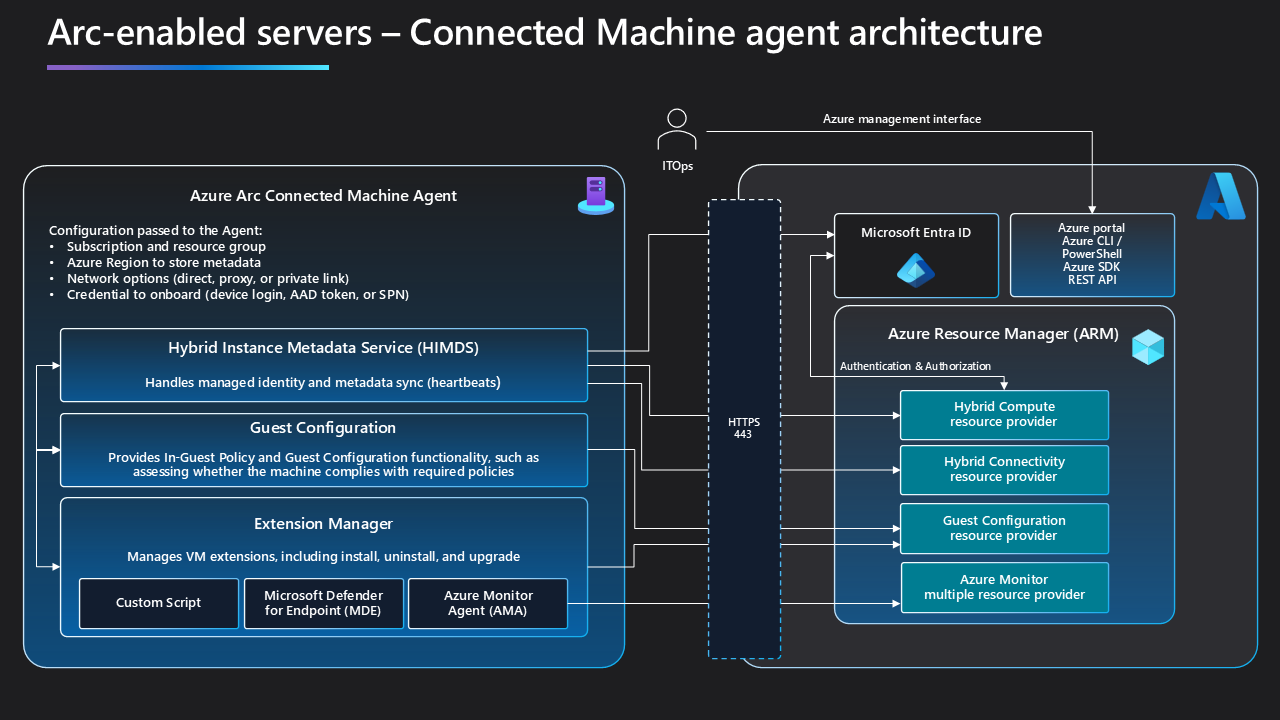
The Azure Connected Machine agent acts as an enablement platform that connects your machine to Azure. It establishes a relationship with your Azure subscription, provides a managed identity for authentication, enables additional capabilities through extensions, and enforces settings on your server. The agent is essential for relaying data and actions between your managed server and Azure.
What security measures should be taken for Tier 0 assets?
For Tier 0 assets, it is recommended to use a dedicated Azure subscription to minimize access and closely monitor permissions. You should also disable unnecessary management features, such as remote access capabilities and the extension manager, unless they are needed. Implementing an extension allowlist can help restrict the use of extensions to only those that meet your security requirements.





 Sign in with LinkedIn